Emergency Springs · Toronto
Extension Spring Replacement in Toronto
The home inspector's report on the house you are buying flags the garage door: extension springs with no safety cable running through them, coils showing rust, and a door that sank when he lifted it partway. The seller has never had it looked at.
Call now · open 24/7(289) 804-6661Right now
Before the door is looked at
Call (289) 804-6661, open 24/7.
When a spring breaks, the safe approach for the household is to leave the door where it is, keep people and vehicles clear, and avoid running the opener, which can damage the top section, the trolley or the gear drive.
Pull the manual release only when the door is fully closed unless a technician asks otherwise; a door disconnected while partly open can move on its own if the springs are out of balance.
Never drive a vehicle at a closed door to get out; the door collapses and the stored tension in the counterbalance is released. Use the release, the outside key release, or a technician.
In plain words
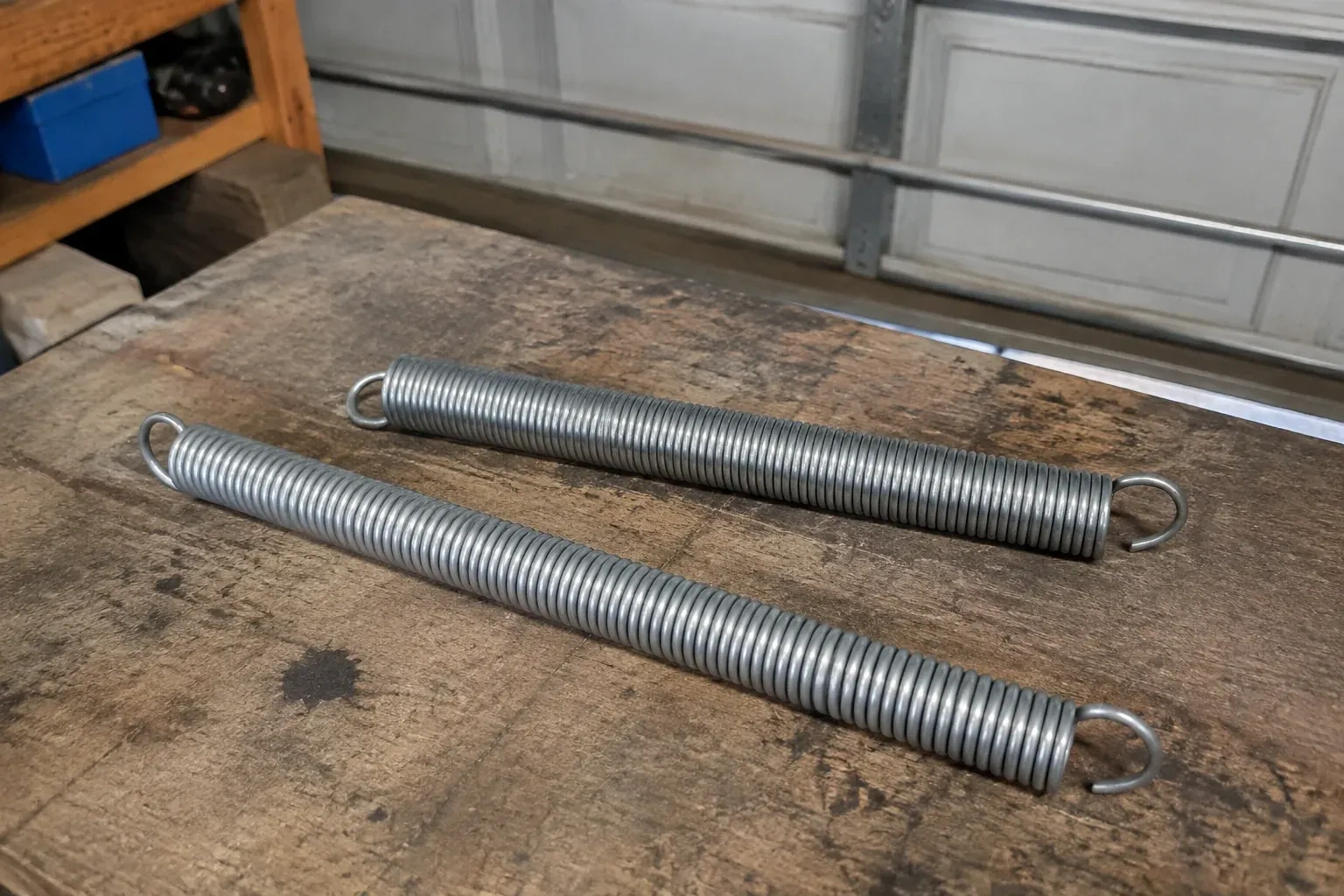
Extension springs are common on the detached garages behind older houses, where a low ceiling left no room for a torsion shaft, and those garages are rarely heated. Damp summers, hard frosts and salt carried in on the car pit the spring wire over the years, and a fatigued spring most often lets go on a cold morning when the steel is stiffest. Replacement fits a new pair rated for the door, renews the pulleys and cables that have rusted alongside them, adds containment cables where the original installation never had any, and leaves a door that lifts easily by hand when the power is out.
How the visit goesYou pulled the red cord to open the door during a power cut and it barely moved. Lifting it took your whole weight, and when you let go it came down hard. It used to float up with one hand.
Extension Spring Replacement · Toronto
How the visit goes
- 1
The rest of the door, and why the spring went
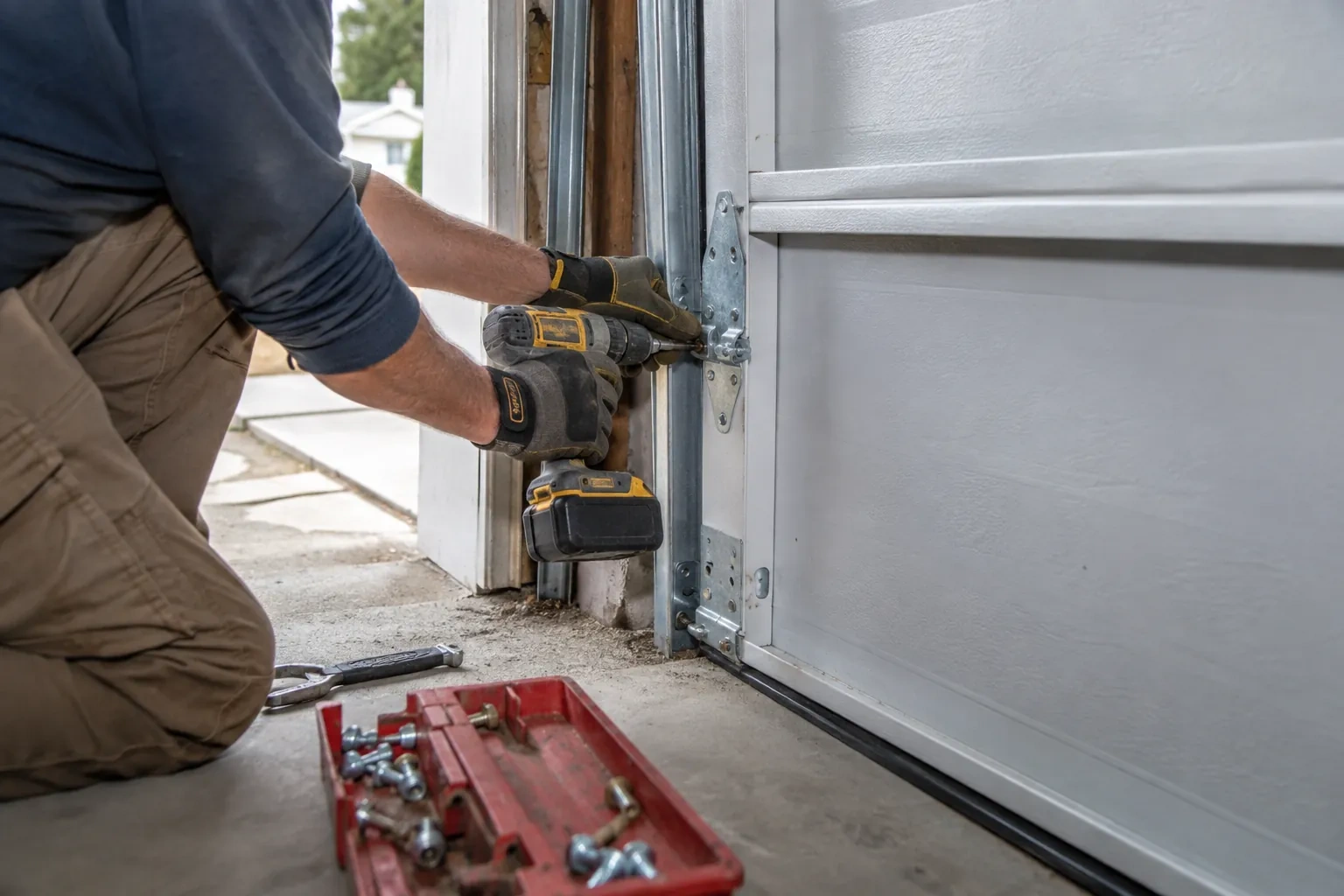
A spring rarely fails on its own, so the first look ends with the door it was lifting. The technician checks the rollers for cracked wheels and bent stems, the hinges for splits, the track for a bend or a bracket pulled off the jamb, and the bottom section for a dent that catches. The opener's force setting is noted, since an opener turned up to compensate for tired springs will overpower the new ones. And the history matters: a door recently fitted with insulation panels or windows weighs more than the springs were chosen for, and a door that has been closed onto snow or a bin has had its cables jolted.
- 2
Fitting a pair that matches the door
The new springs are selected from the door's measured weight and its height, which together give the rating and the stretched length required, and they are fitted as a pair even if one old spring looked sound. The technician checks each new spring's wire size, coil diameter and relaxed length against the specification before it goes up, and confirms the end loops suit the hanger and the pulley fork. The rear loop is hung on the hanger and the front loop takes the pulley fork. On heavier doors that carry two springs per side, all four are renewed together. Nothing is hooked to the door yet; the springs simply hang in place, slack, waiting for the cables.
- 3
A door that lifts as it was designed to
The difference is felt the first time you pull the release cord and lift the door yourself. It rises with one hand, pauses where you leave it, and comes down at the speed you lower it rather than dropping the last stretch. Under power, the opener runs without the strain in its note that had crept in as the old springs tired, and the door reaches the floor evenly along the seal. Both springs now stretch to the same length as the door closes, both pulleys turn without a squeal, and the cables lie in their grooves. A door in this condition puts little wear on the opener, which is good news for the motor.
In the van
- Track clamps or locking pliers
- Pulleys (sheaves) and forks
- Lag screws and hanger bolts
- Replacement rollers and hinges
- Lift cables
What affects the quote
- 1
Getting the van to the garage
A detached garage down a shared laneway, a rural property or a building with the bay behind a gate takes more time to reach and set up in, and the quote allows for that.
- 2
Condition of the lift cables
Cables with fraying, rust at the loop or a kink are renewed as a pair while the springs are off. Sound cables are re-routed and set, and the quote says which applies.
- 3
Corroded fasteners
In an unheated garage the bolts through pulley forks and hanger brackets rust solid; freeing or cutting them and fitting new hardware takes time and shows in the parts list.
Same fees day, night or weekend.
Extension Spring Replacement: questions
Do the pulleys need replacing at the same time?
Often, yes. Each side has two pulleys, one on the spring and one fixed at the front of the track, and the cable rides over both on every trip. A pulley whose wheel has worn a sharp groove, or whose bearing has stiffened, drags on the cable and adds load the spring has to overcome, which is a common reason the old spring wore early. Pulleys that spin freely and run true can stay.
What is the difference between extension springs and torsion springs?
They balance the door in different places. Extension springs are the two long coils that run beside the horizontal tracks and stretch as the door closes; they work through pulleys and cables. A torsion spring is wound on a shaft above the door opening and turns drums that wind the cables. The parts, the way tension is set and the service itself are different, so it helps to say which you have when you call.
Why does the opener get adjusted after new springs?
Because the door is now much lighter for the opener to move. Over the years, as the old springs weakened, the opener's force setting may have been turned up to keep the door going, and its travel limits were set against a door that sat differently on the floor. Left alone, that extra force would push the newly balanced door too hard. Resetting force and travel, then repeating the reversal tests, matches the opener to the door it now has.
Springs & Hardware
Bigger photo, sooner job: Emergency Book soon Plan ahead
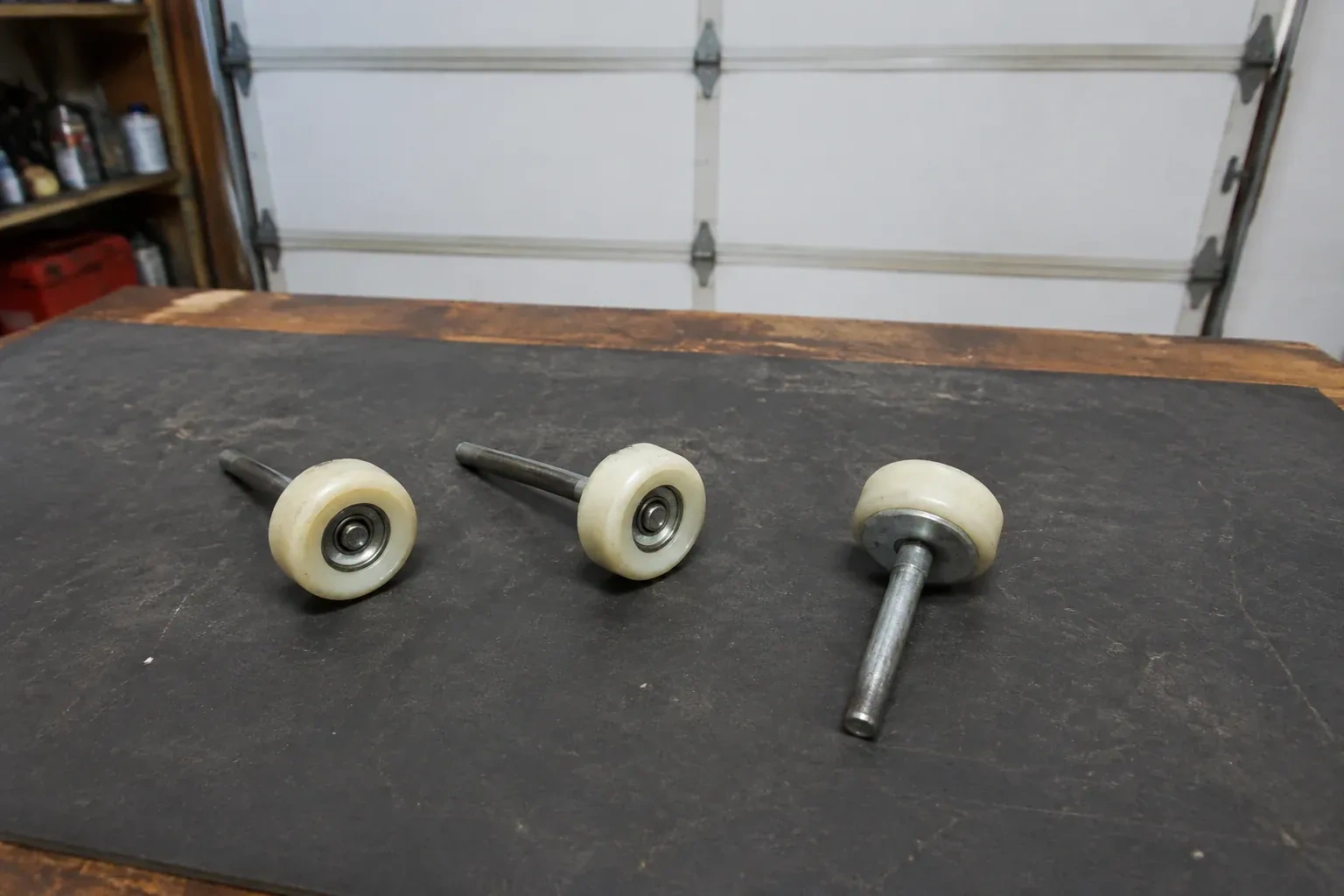 Book soonGarage Door Roller ReplacementEvery morning the door announces itself: a rattle on the way up, a grinding squeal on the way down, loud enough that the…
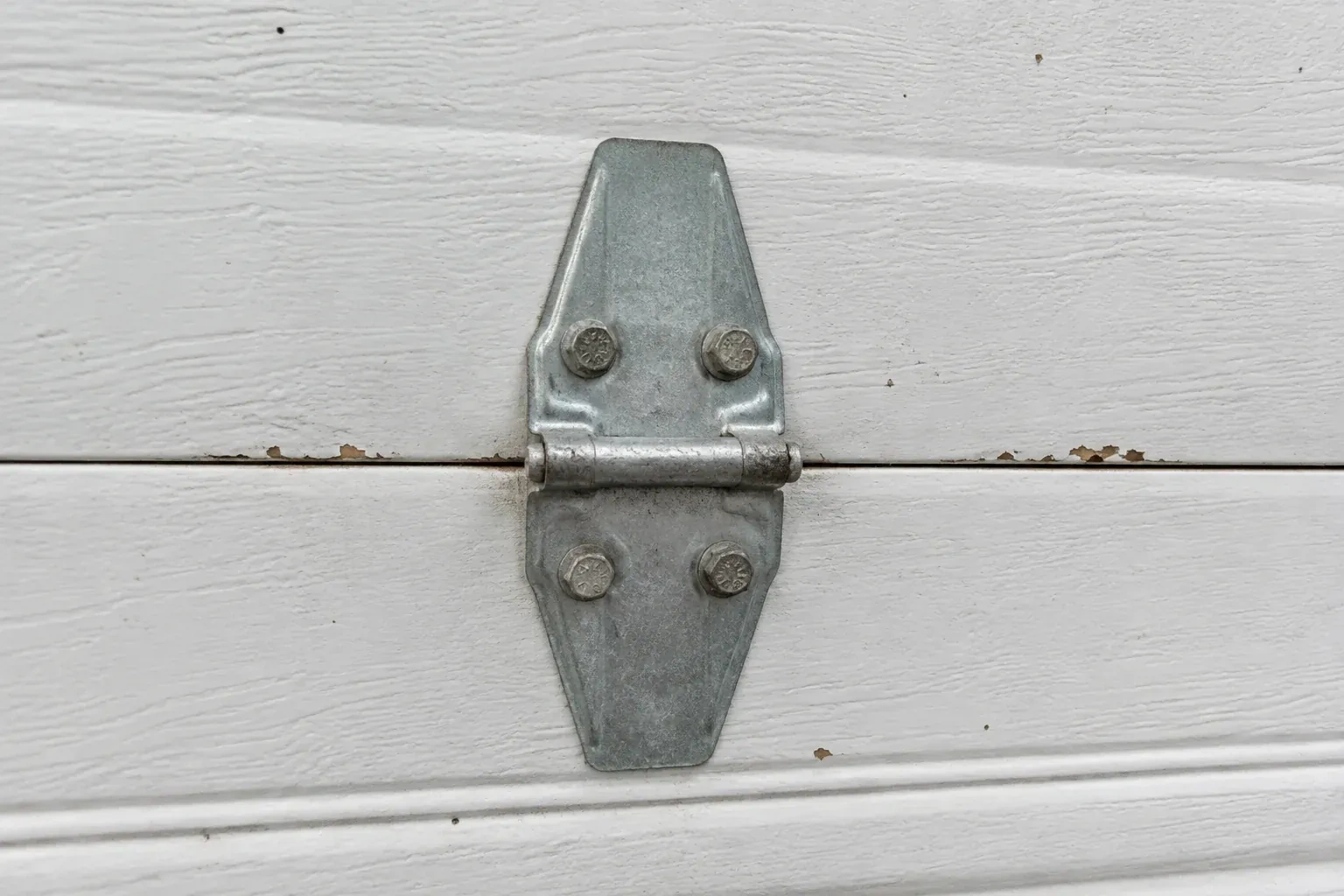 Book soonGarage Door Hinge ReplacementPressing a hand against one of the middle hinges makes it rock on the panel.
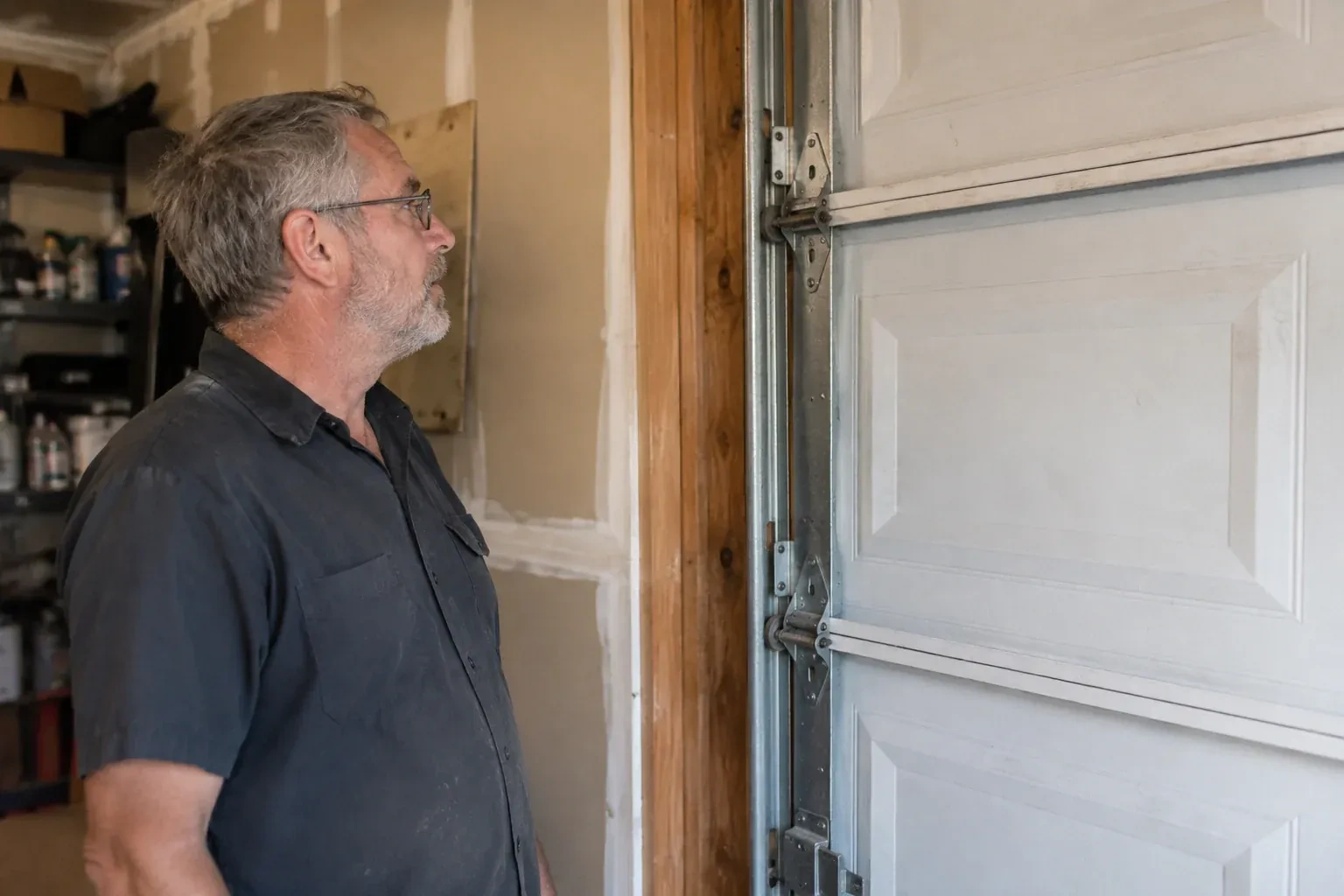 Book soonGarage Door Track Repair or ReplacementThe door has started rubbing the frame on the left, leaving a shiny stripe down the weatherstrip.
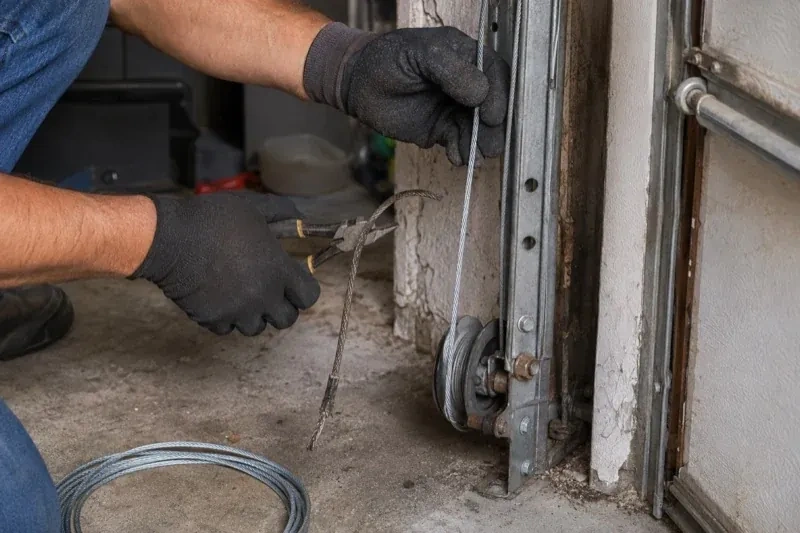 EmergencyGarage Door Cable ReplacementAfter years of slushy winters the cables look thinner near the bottom brackets, with rust streaks running down the door where…
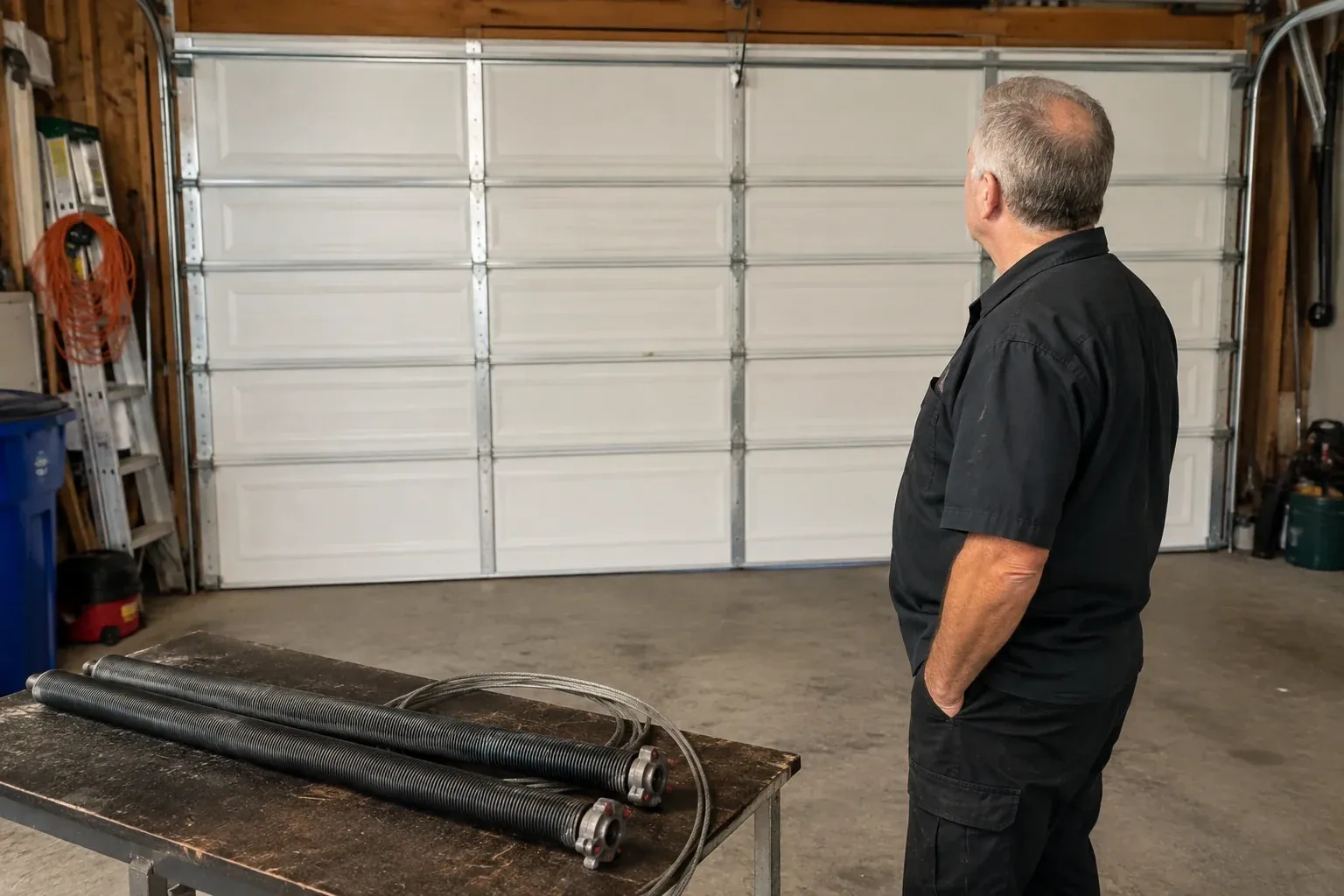 EmergencyTorsion Spring ReplacementLooking up at the coil above the door, you can see a clean split with a gap of several centimetres between the two halves.
Extension Spring Replacement near you
Toronto, Ontario
Toronto information
- Town
- Toronto, Ontario
- In business
- 27 years
- Hours
- Open 24/7 · nights, weekends and holidays, same fees
- Phone
- (289) 804-6661
- Visits
- On-site assessment preferred. Request a visit or call.
What the census means at the door
58%
Older homes. About 58% of homes in Toronto were built in 1980 or earlier, according to the 2021 Census.
Where most houses were built a generation or more ago, a good share of garage doors are still the originals: wood or early steel sections on extension springs. Those doors respond well to fresh pulleys, safety cables and a careful balance, and the technician carries the parts for them.
23%
Single-detached houses make up about 23% of homes in Toronto (2021 Census).
Townhouses built in rows tend to have identical doors from the same builder, so when springs and openers age they do so together along the street. Owners often arrange service for several doors at once, and we can plan a single visit that covers the row.
Open 24/7
Request a visit
The home inspector's report on the house you are buying flags the garage door: extension springs with no safety cable running through them, coils showing rust, and a door that sank when he lifted it…
Call now · open 24/7(289) 804-6661- On-site assessment preferred
- Same fees day, night or weekend
- 27 years in business