Emergency Springs · Toronto
Torsion Spring Replacement
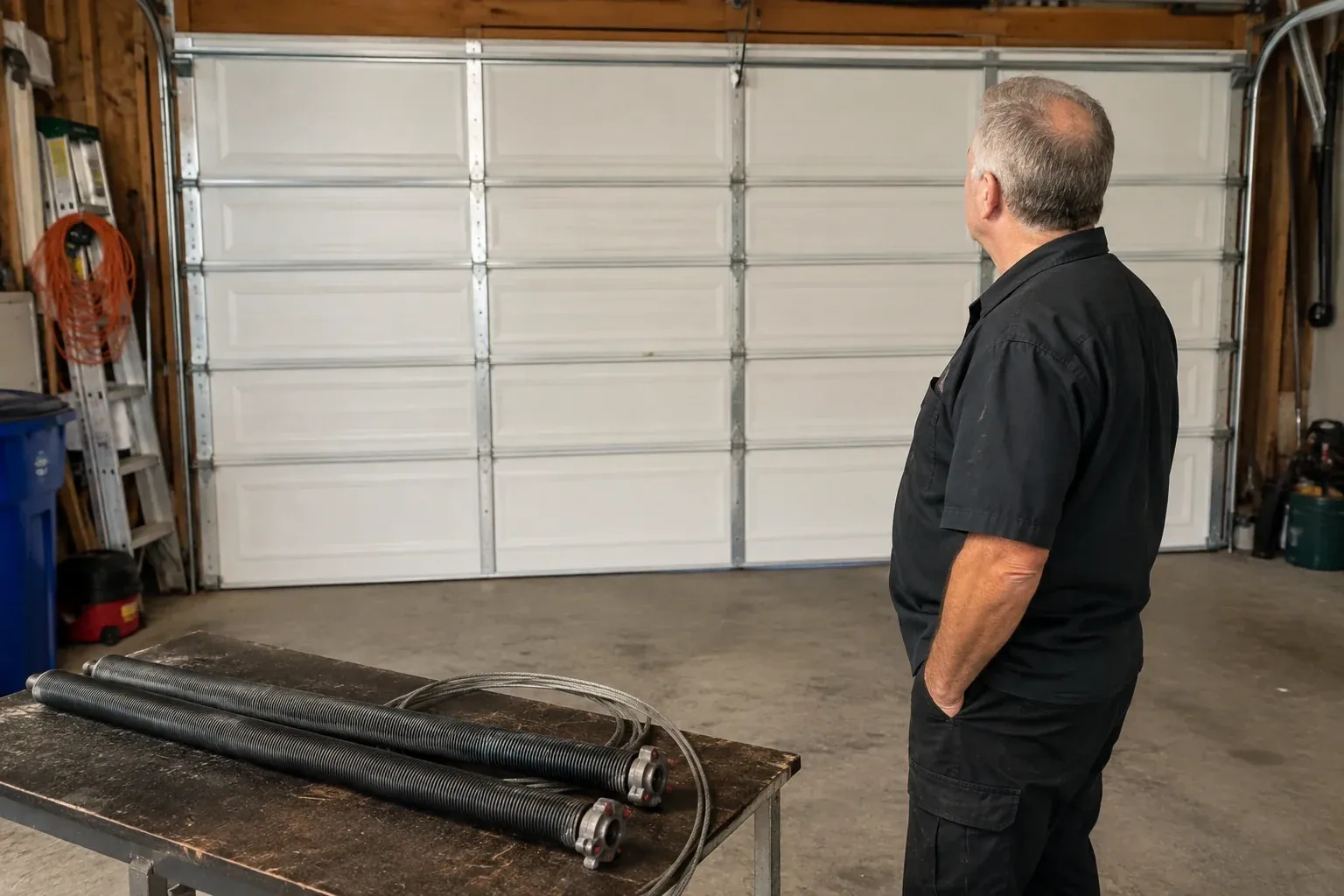
Looking up at the coil above the door, you can see a clean split with a gap of several centimetres between the two halves. The rest of the spring looks fine, but the door has become almost impossible to move by hand.
Call now · open 24/7(289) 804-6661Right now
Before the door is looked at
Call (289) 804-6661, open 24/7.
When a spring breaks, the safe approach for the household is to leave the door where it is, keep people and vehicles clear, and avoid running the opener, which can damage the top section, the trolley or the gear drive.
Pull the manual release only when the door is fully closed unless a technician asks otherwise; a door disconnected while partly open can move on its own if the springs are out of balance.
Never drive a vehicle at a closed door to get out; the door collapses and the stored tension in the counterbalance is released. Use the release, the outside key release, or a technician.
In plain words
Torsion spring replacement restores the counterweight that makes a garage door light enough to lift. A sectional door often weighs more than a fridge, and the spring above the opening carries nearly all of that load, storing energy as the door closes and releasing it as it opens. When a spring breaks or wears out, the technician removes it, fits a spring matched to the door's weight and height, winds it to the correct number of turns and checks that the door balances at every point of travel. The opener returns to doing its light share of the work, and the door moves smoothly and evenly again.
How the visit goesOne side of the door sits higher than the other in the tracks, and a lift cable is hanging slack or has jumped off its drum. On a two-spring door this often follows one spring letting go while the other keeps pulling.
Torsion Spring Replacement · Toronto
How the visit goes
- 1
Making the door safe to work on
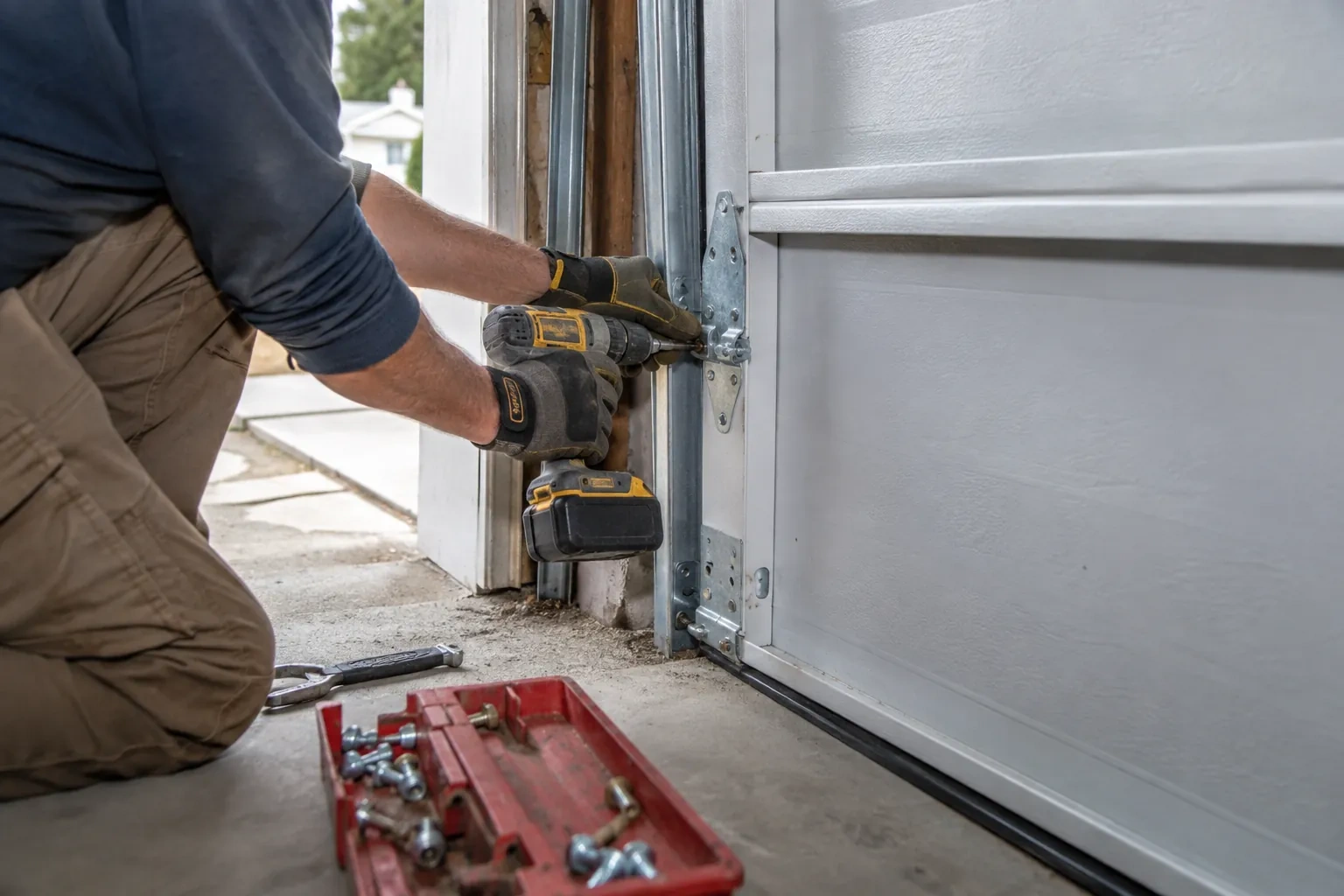
Before anything is measured or removed, the door and the opener are put into a controlled state. The opener is unplugged and the trolley released so the motor cannot move the door partway through the job. The door is brought fully closed, and locking pliers or clamps are set on the track just above a roller so the door stays down while spring tension changes. The technician clears the space beneath the shaft, checks that people and pets are out of the garage, and looks at where a vehicle sits so the ladder and winding position are safe.
- 2
Setting the cables and drums
A balanced door depends on both cables pulling equally, so drum work gets careful attention. Each lift cable is wound into the grooves of its drum with the loop secured on the drum pin, and the drums are slid firmly against the end bearing plates. The technician rotates the shaft to take up slack, then sets tension so both cables are equally taut with the door fully closed; a level across the shaft confirms it is sitting true. Drum set screws are tightened to the shaft in this position. Even cable tension keeps the door square in its tracks through every part of its travel.
- 3
A door that carries its own weight
The clearest change is in your hands: with the opener released, the door lifts with light, even effort and holds its position at mid-height instead of sliding down. That is what a balanced counterweight feels like. The door closes softly at the floor and rises without hesitation, and the opener runs with a calmer sound because it is guiding the door rather than hauling it. You can test this yourself any time by pulling the release cord with the door closed and lifting to waist height; a door that stays put is a door in balance.
In the van
- Socket set and wrenches
- Wire gauge and tape measure
- Locking pliers for the track
- Centre bearing bracket and bearing
- Torsion shaft and coupler
What affects the quote
- 1
Converting from extension springs
Moving a door from extension springs to a torsion system adds a shaft, bearings, drums and brackets, and removes the old pulleys, which is a broader job than replacing an existing torsion spring.
- 2
Anchoring to the header
A centre bracket with pulled lag bolts, a split header or a corroded bracket needs refastening, reinforcing or replacement before the spring can be wound, which is included when found.
- 3
Drum type and lift configuration
Standard-lift drums are the common case. High-lift, vertical-lift or low-headroom arrangements use different drums, cable lengths and turn counts, which changes the parts and the time involved.
Same fees day, night or weekend.
Torsion Spring Replacement: questions
What does a cycle rating mean?
One cycle is a full open and close. Springs are built for a set number of cycles, and a standard residential spring is commonly rated around ten thousand. A household that uses the door six times a day reaches that in roughly four to five years, while a door used twice a day stretches the same rating much further. Higher-cycle springs use heavier wire and a longer coil to produce the same force with less stress, so they last proportionally longer.
What should I do before the technician arrives?
Keep the door closed and leave it alone, move any vehicle you can reach out of the way or at least clear the space in front of the door inside the garage, and make sure there is room for a ladder beneath the shaft. Note whether there is one spring or two and whether a cable is loose. A photo of the spring area, the drums and the opener helps the technician bring the right parts.
Why do springs seem to break in cold weather?
Cold makes steel slightly less forgiving and thickens the grease on the coils, so a spring that has already used most of its cycle life is more likely to let go on a frosty morning when the door is first opened. The cold is the final straw rather than the cause; the underlying reason is fatigue from years of cycles, sometimes helped along by rust and dry coils.
Springs & Hardware
Bigger photo, sooner job: Emergency Book soon Plan ahead
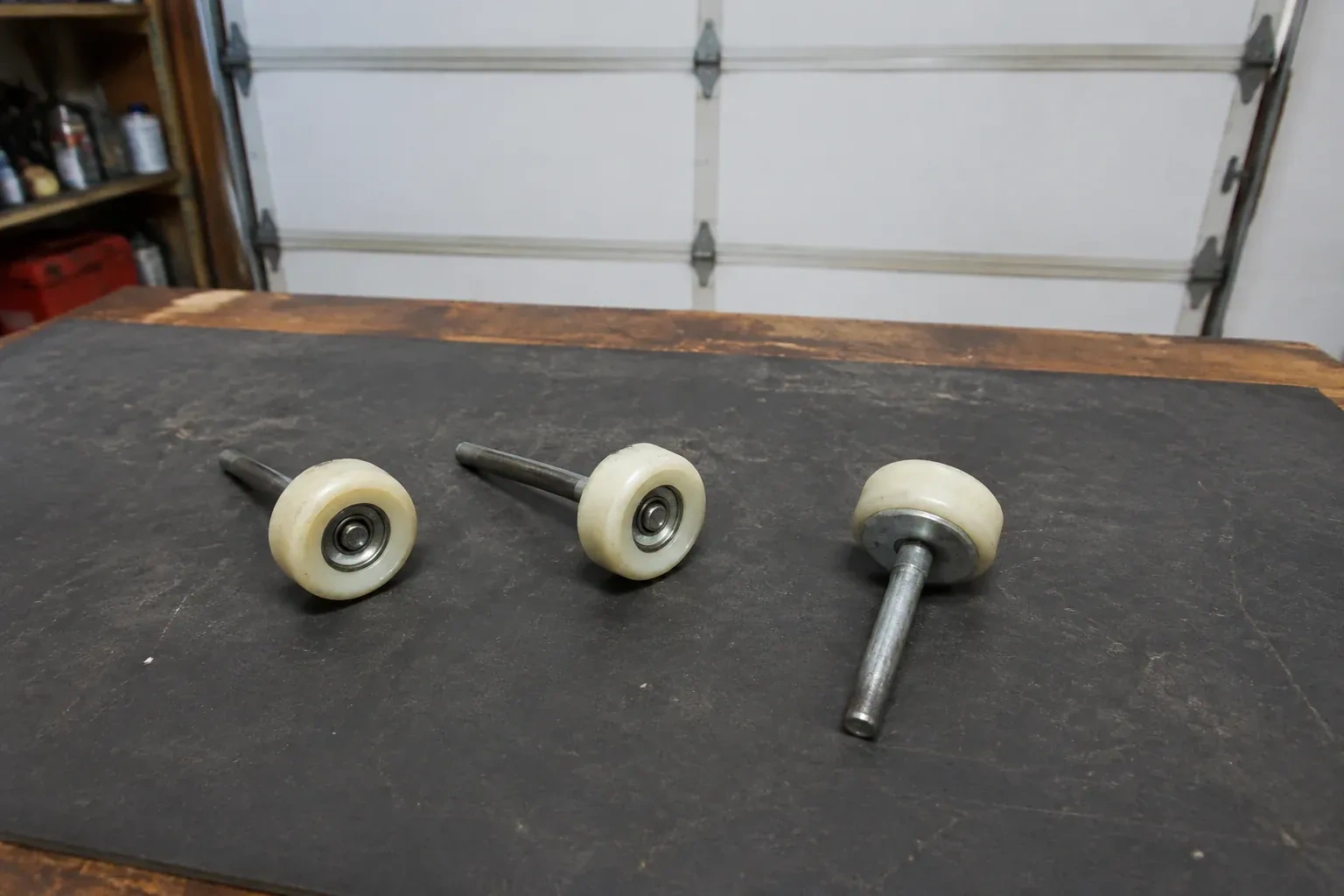 Book soonGarage Door Roller ReplacementEvery morning the door announces itself: a rattle on the way up, a grinding squeal on the way down, loud enough that the…
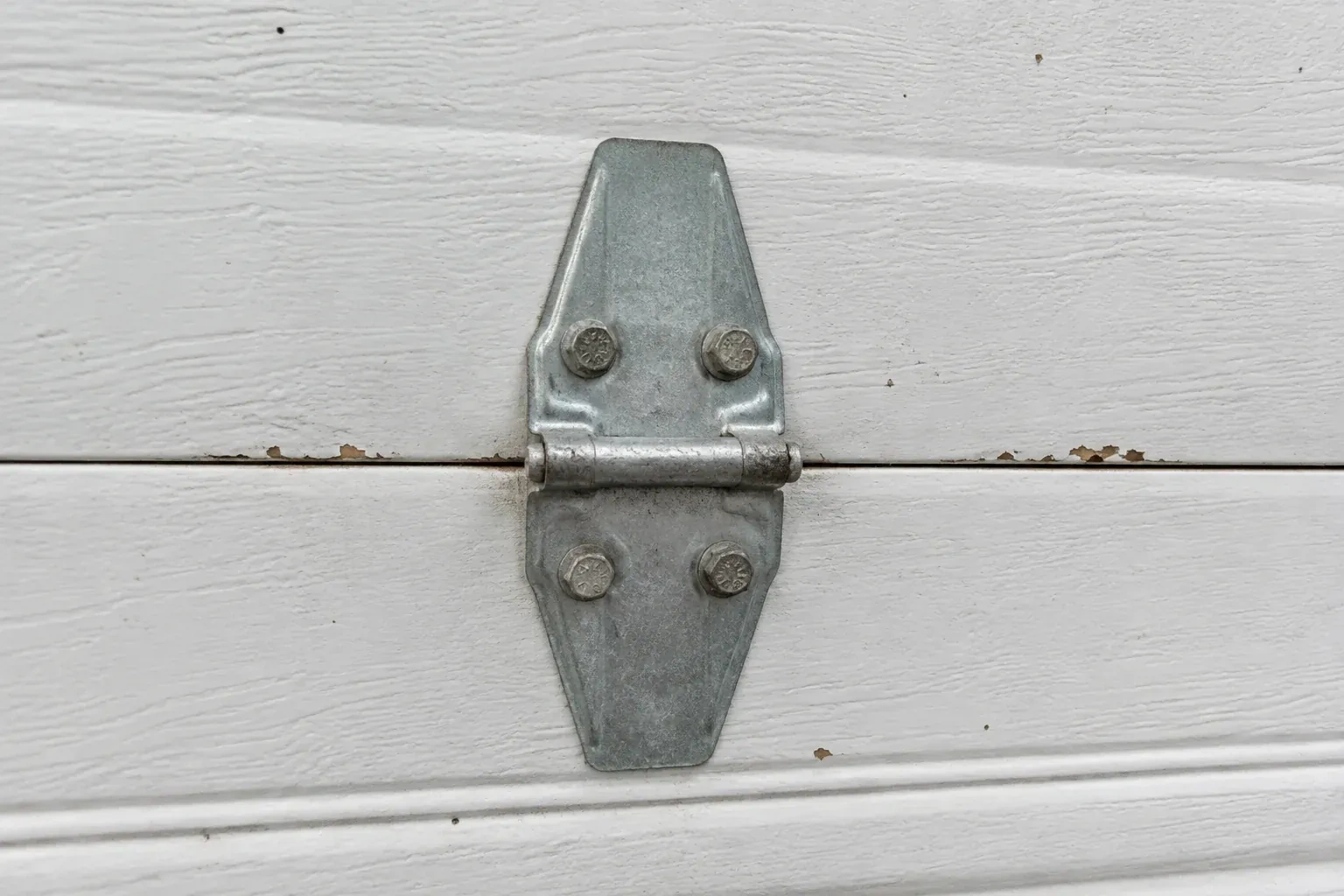 Book soonGarage Door Hinge ReplacementPressing a hand against one of the middle hinges makes it rock on the panel.
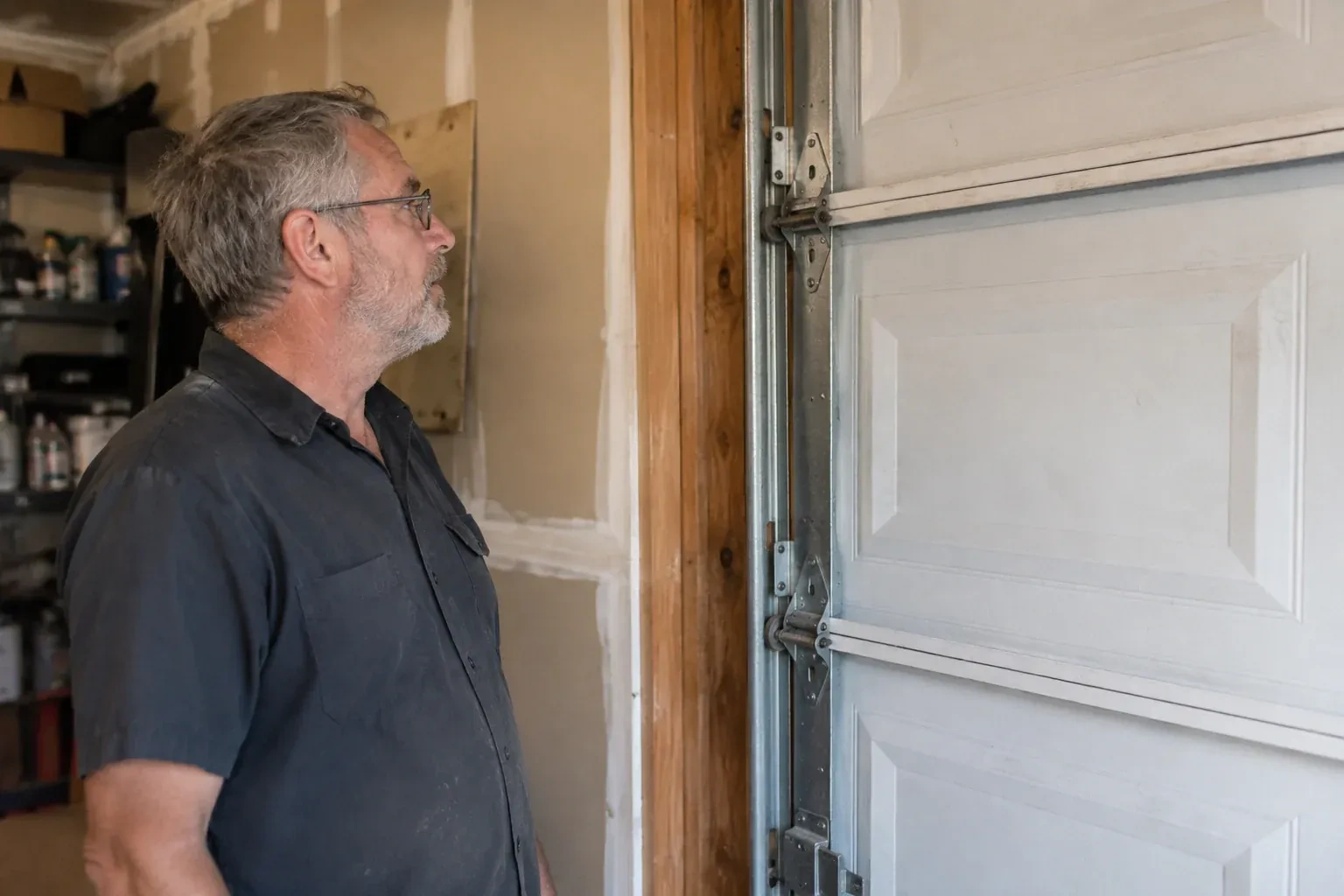 Book soonGarage Door Track Repair or ReplacementThe door has started rubbing the frame on the left, leaving a shiny stripe down the weatherstrip.
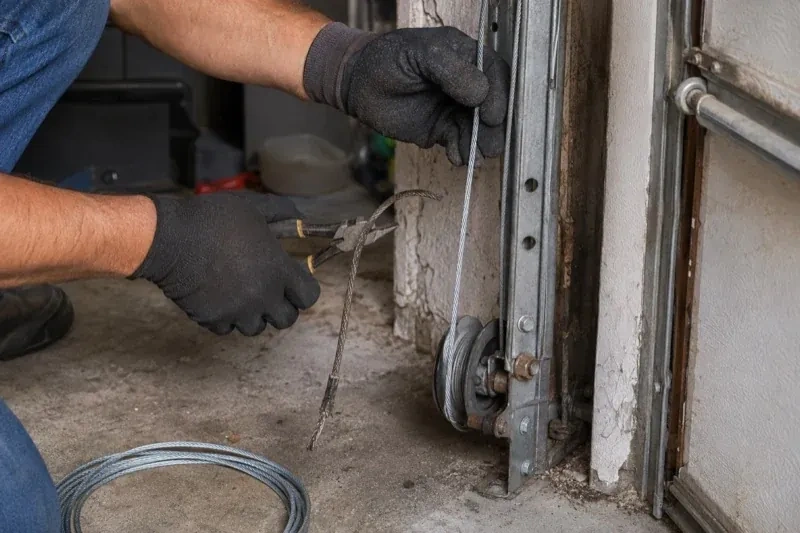 EmergencyGarage Door Cable ReplacementAfter years of slushy winters the cables look thinner near the bottom brackets, with rust streaks running down the door where…
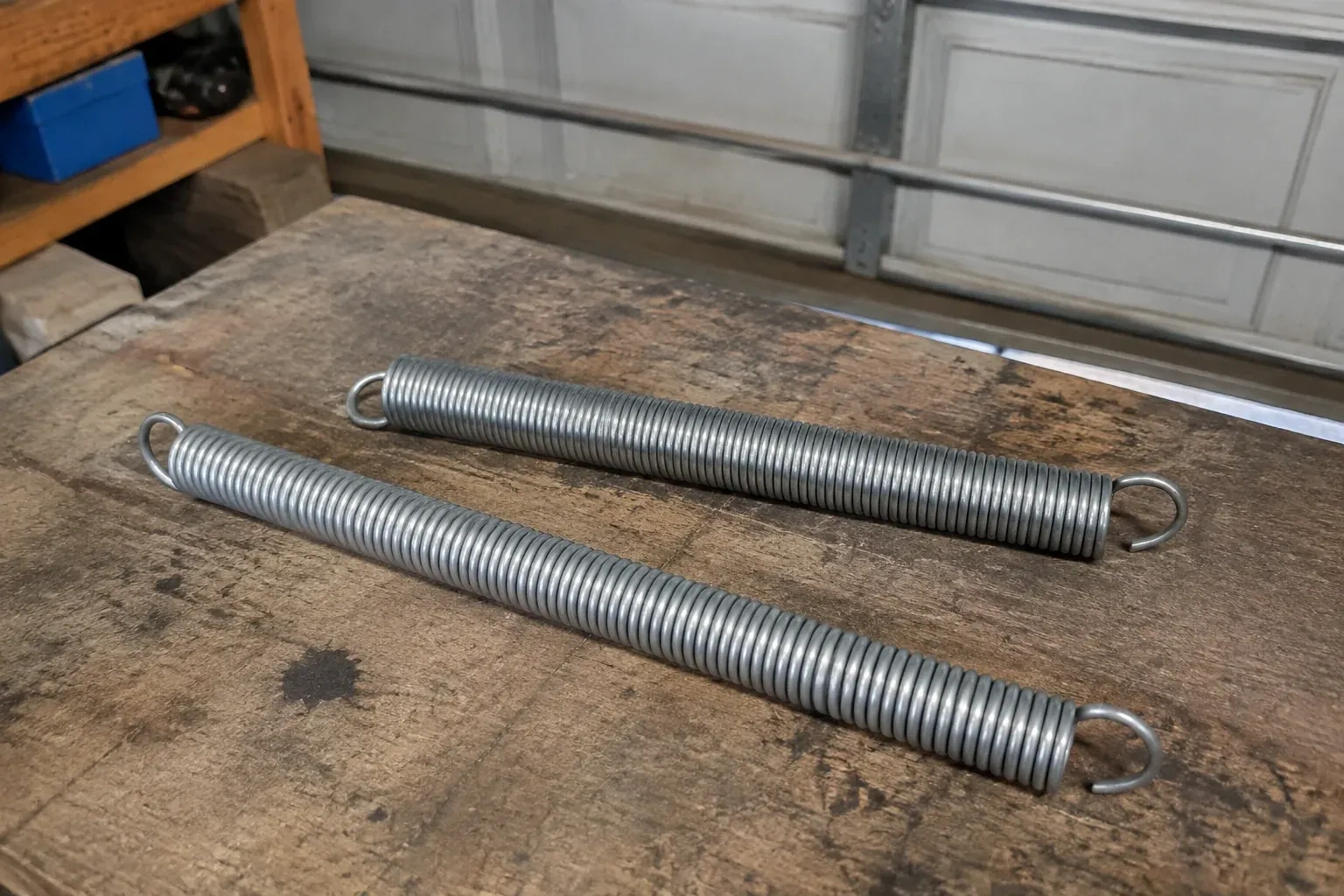 EmergencyExtension Spring ReplacementThe home inspector's report on the house you are buying flags the garage door: extension springs with no safety cable running…
Torsion Spring Replacement near you
Toronto, Ontario
Toronto information
- Town
- Toronto, Ontario
- In business
- 27 years
- Hours
- Open 24/7 · nights, weekends and holidays, same fees
- Phone
- (289) 804-6661
- Visits
- On-site assessment preferred. Request a visit or call.
What the census means at the door
58%
Older homes. About 58% of homes in Toronto were built in 1980 or earlier, according to the 2021 Census.
Where most houses were built a generation or more ago, a good share of garage doors are still the originals: wood or early steel sections on extension springs. Those doors respond well to fresh pulleys, safety cables and a careful balance, and the technician carries the parts for them.
23%
Single-detached houses make up about 23% of homes in Toronto (2021 Census).
Townhouses built in rows tend to have identical doors from the same builder, so when springs and openers age they do so together along the street. Owners often arrange service for several doors at once, and we can plan a single visit that covers the row.
Open 24/7
Request a visit
Looking up at the coil above the door, you can see a clean split with a gap of several centimetres between the two halves.
Call now · open 24/7(289) 804-6661- On-site assessment preferred
- Same fees day, night or weekend
- 27 years in business