Book soon Repairs · Toronto
Garage Door Manual Lock Repair
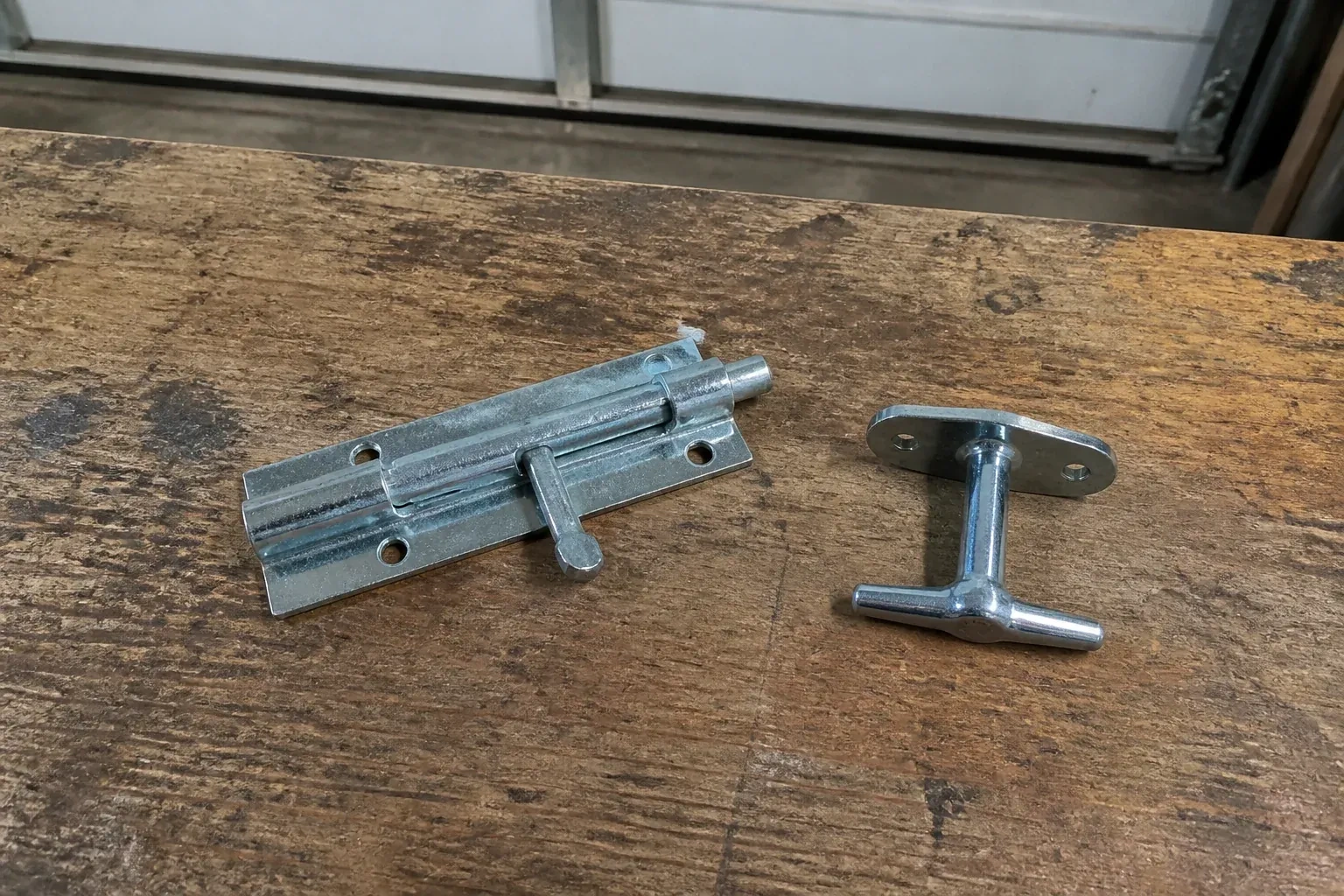
The power is out in a storm, you pulled the red cord and lowered the door by hand, and now you want to lock it. The slide bolt on the inside edge is welded in place by years of rust and refuses to budge.
Call now · open 24/7(289) 804-6661In plain words
Many lock complaints turn out to be door complaints. The bar on a slide lock or a T-handle has to land in a small slot, and it only gets there if the door stops exactly where it stopped when the lock was fitted. A floor that has heaved, a track bracket that has loosened, a bottom seal that has flattened, or ice under the door all shift that landing point. The visit begins with the door: closed by hand, checked for level and for how it meets the floor and the tracks. With the door where it belongs, the lock often needs only a small adjustment to its guides.
How the visit goesYou have just moved in. The garage door carries a proper keyed handle on the outside, but no key came with the house, and the inside slide is painted over. You would like to be able to use it.
Garage Door Manual Lock Repair · Toronto
How the visit goes
- 1
Closing the door by hand first
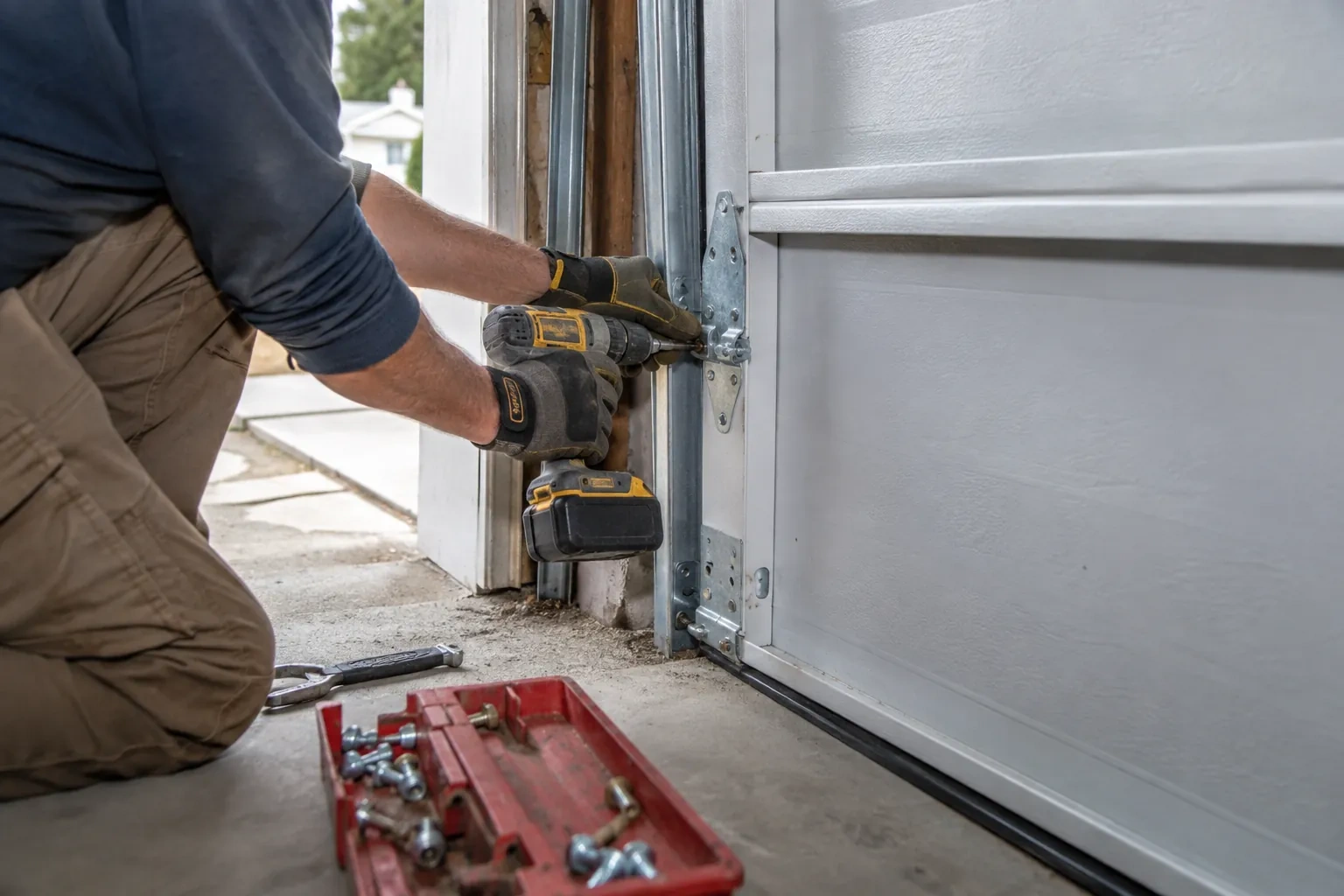
Before the lock is touched, the opener is disconnected and the door is lowered by hand until it rests on the floor. The technician checks that both bottom corners meet the concrete, that the top section sits flat against the header, and that the door is level across its width. Then the bar is sighted against its slot. If the two are out of step, the reason is looked for in the door: a settled slab, a loosened track bracket, a compressed bottom seal, snow or ice at the threshold, or an opener limit set to stop the door short. Sorting the door out first keeps a good lock from being replaced for a fault that lives elsewhere.
- 2
Rebuilding or replacing the centre mechanism
Inside the door, the cover comes off the centre lock body. A broken return spring is replaced and the cam checked for wear; where the cam has rounded off or the body has cracked, a complete mechanism of matching pattern is fitted so the existing handle and bars line up with it. The spindle is checked for twist and replaced with one of the correct length for the door's thickness, and the inside knob or turn handle is secured with a fresh set screw onto a flat. Everything is then operated from both sides with the door shut, adjusting the bar connections until a quarter turn throws both bars fully and releases them cleanly.
- 3
Locking the door when the power is out
The manual lock is now your plan for a dark evening. The sequence is simple: with the door closed, pull the opener's release cord so the trolley disconnects, then throw the slide bolt or turn the T-handle to lock. In the morning, or when the power returns, reverse it exactly: unlock first, confirm both bars are clear of the track, then re-engage the opener as its manual describes, usually by running it once so the trolley picks up the arm. The technician walks through this with you at the door, and it is worth practising once so the order is second nature before the storm that makes it matter.
In the van
- Track lock-slot punch
- Dry graphite or PTFE lubricant
- Inside turn handle and spindle
- Lock cylinder with tailpiece
- Centre lock body and return spring
What affects the quote
- 1
Door thickness and insulation
Insulated and thicker doors take longer spindles, longer through-bolts and sometimes a sleeve through the foam. Matching those parts to the door affects the parts list.
- 2
Door alignment behind the fault
When the bar misses its slot because the door sits high or crooked, the fix reaches into track brackets, opener limits or the door's closed position, and that adjustment is quoted alongside the lock work.
- 3
Damage from an opener run against the lock
A section creased above the lock, a torn lock body, a bent bar or a strained opener arm each add repair or parts beyond the lock itself, and are named separately once seen.
Same fees day, night or weekend.
Garage Door Manual Lock Repair: questions
What lubricant belongs on a garage door lock?
Dry graphite or a PTFE lock lubricant for the key cylinder, because oil traps grit and moisture in the pins. A light silicone film for the bars and their guides, wiped rather than dripping, so salt spray and slush have less to cling to. Grease is avoided everywhere on the lock, as it thickens in the cold and collects dirt that gums the action.
Do you replace the whole handle or just the cylinder?
Whichever the fault calls for. A worn or broken cylinder in a handle that is otherwise sound is swapped or rekeyed on its own. A handle that is cracked, corroded through or of a pattern with no parts available is replaced as a set with its spindle and inside turn handle. The technician shows you what has failed before either route is taken.
What information helps when I book the visit?
Whether the lock is an inside sliding bar, an outside T-shaped handle with a key, or both; whether the handle turns and whether anything moves when it does; whether the key goes in and turns; whether an opener is fitted and whether it has ever run with the lock engaged; the door's material and age; and whether you hold a key. A photo of the inside of the lock is useful.
Repair & Maintenance
Bigger photo, sooner job: Emergency Book soon Plan ahead
 Plan aheadGarage Door Safety Inspection
 Plan aheadGarage Door Tune-Up
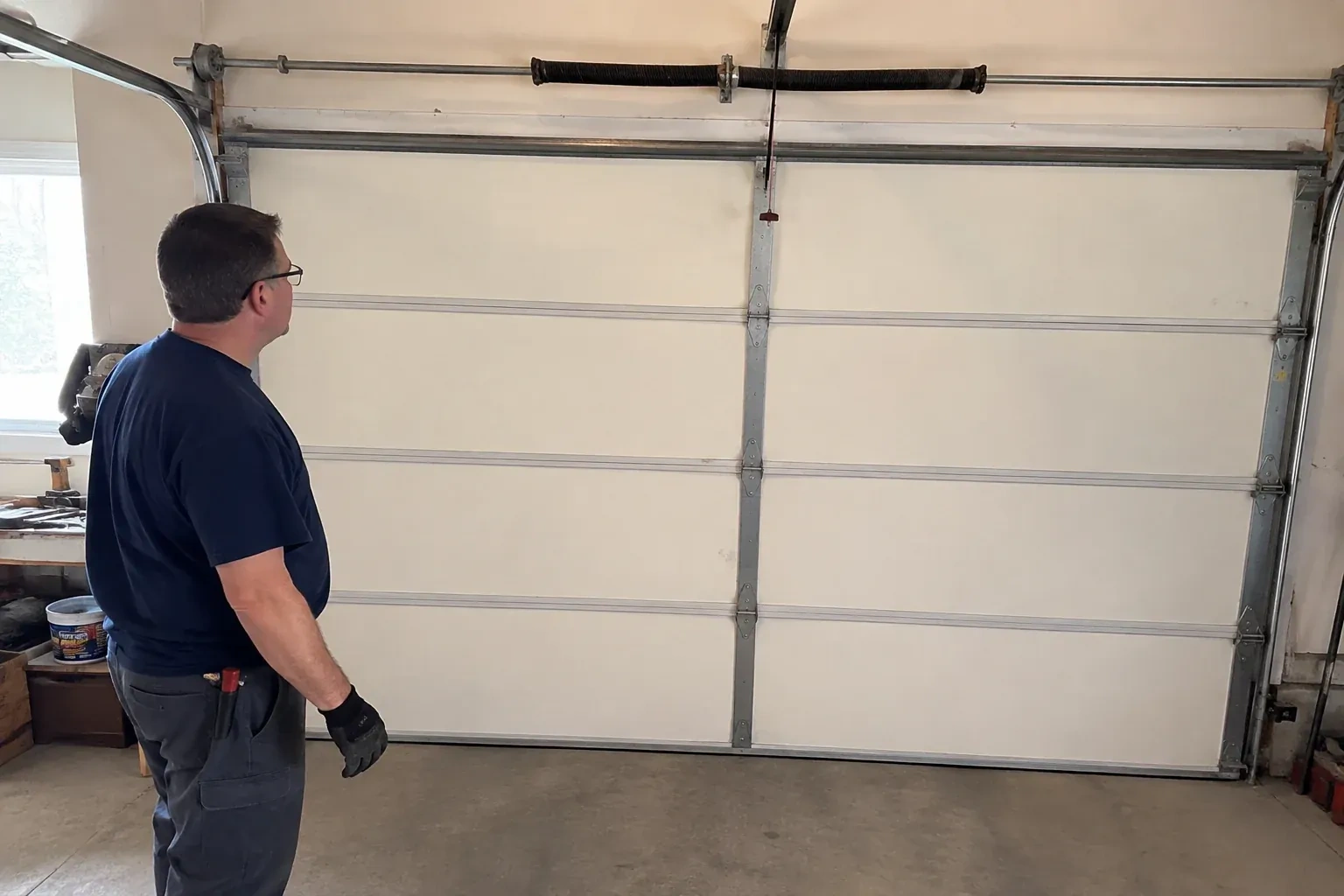 EmergencyOff-Track Garage Door ResetYou tapped the door with the bumper while backing in, barely a nudge, and now the bottom corner has swung inward.
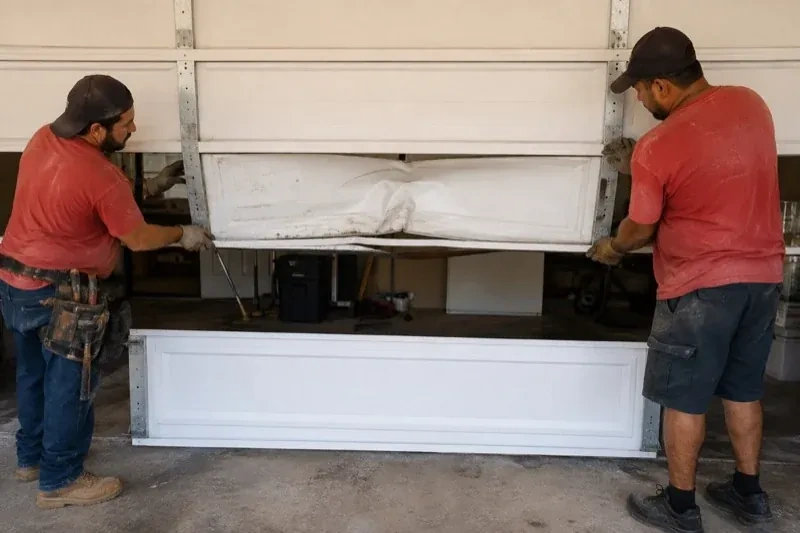 Book soonGarage Door Panel ReplacementYears of slap shots have peppered the lower two sections with dents.
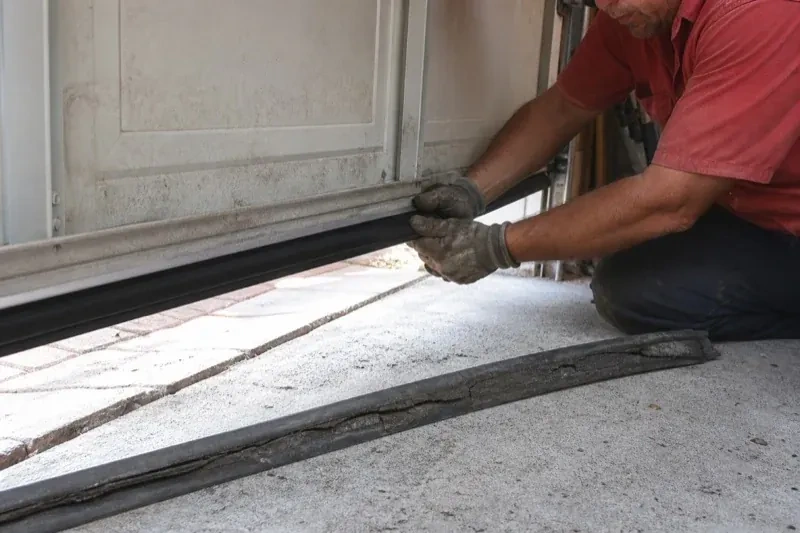 Plan aheadGarage Door Bottom Seal Replacement
Garage Door Manual Lock Repair near you
Toronto, Ontario
Toronto information
- Town
- Toronto, Ontario
- In business
- 27 years
- Hours
- Open 24/7 · nights, weekends and holidays, same fees
- Phone
- (289) 804-6661
- Visits
- On-site assessment preferred. Request a visit or call.
What the census means at the door
58%
Older homes. About 58% of homes in Toronto were built in 1980 or earlier, according to the 2021 Census.
Where most houses were built a generation or more ago, a good share of garage doors are still the originals: wood or early steel sections on extension springs. Those doors respond well to fresh pulleys, safety cables and a careful balance, and the technician carries the parts for them.
23%
Single-detached houses make up about 23% of homes in Toronto (2021 Census).
Townhouses built in rows tend to have identical doors from the same builder, so when springs and openers age they do so together along the street. Owners often arrange service for several doors at once, and we can plan a single visit that covers the row.
Open 24/7
Request a visit
The power is out in a storm, you pulled the red cord and lowered the door by hand, and now you want to lock it.
Call now · open 24/7(289) 804-6661- On-site assessment preferred
- Same fees day, night or weekend
- 27 years in business