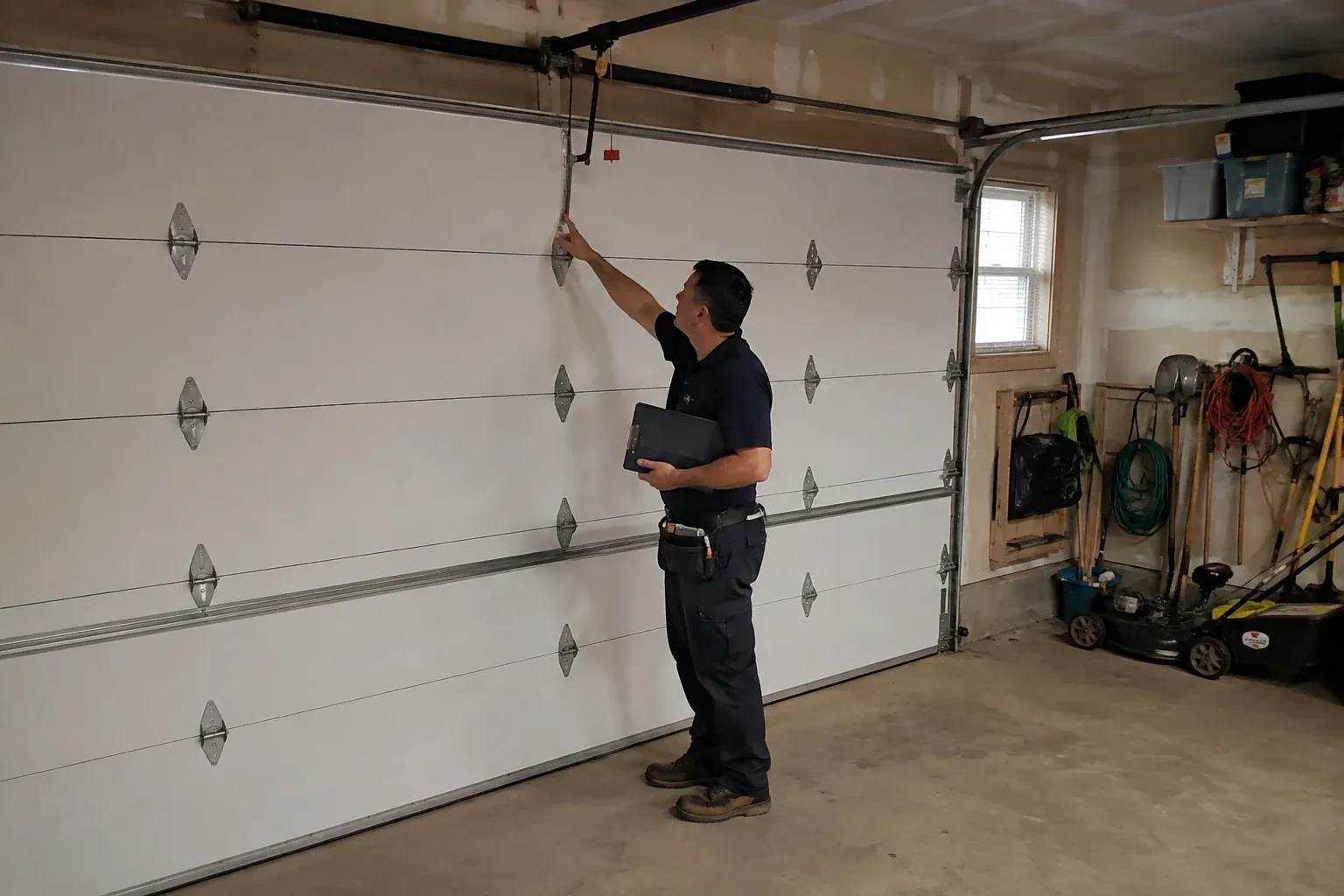
Plan ahead Repairs · Kipling Heights
Garage Door Tune-Up in Kipling Heights
The door lands with a thud you can feel through the kitchen floor, and sometimes it bounces back up a few centimetres before settling. The bottom section has a small dent where it keeps slamming the concrete.
Call now · open 24/7(289) 804-6661In plain words
A tune-up is also a safety check of the opener. Openers made since the early 1990s carry two ways of protecting anything in the door's path: photo-eyes near the floor that reverse the door when the beam is broken, and a contact reversal that sends the door back up if it meets resistance. The technician cleans and aligns the sensors, then tests both: an object waved through the beam while the door closes, and a 2x4 laid flat under the centre of the door. A door that reverses cleanly on both is doing what its maker intended, and you learn how to repeat the test yourself each month.
How the visit goesSince the first cold snap the door has been sluggish. It climbs slowly, hesitates near the top and the opener motor sounds strained. On the coldest mornings it opens a hand's width, thinks about it, and comes back down.
Garage Door Tune-Up · Kipling Heights
How the visit goes
- 1
Sorting the sounds by where they live
Noise is the most common reason a tune-up is booked, and every sound has an address. A high squeak that repeats with each section movement points to dry hinge pins. A rumbling that follows the door up and down usually comes from roller bearings. A sharp rattle at the top of travel is often a loose track bracket or hinge screw. A rhythmic slap along the ceiling is a slack chain on the opener rail. A pop or crack as the door starts is worth a closer look at the springs and drums. The technician places each sound, then checks that spot directly rather than lubricating everything and hoping.
- 2
Lubricating the right points and skipping the wrong ones
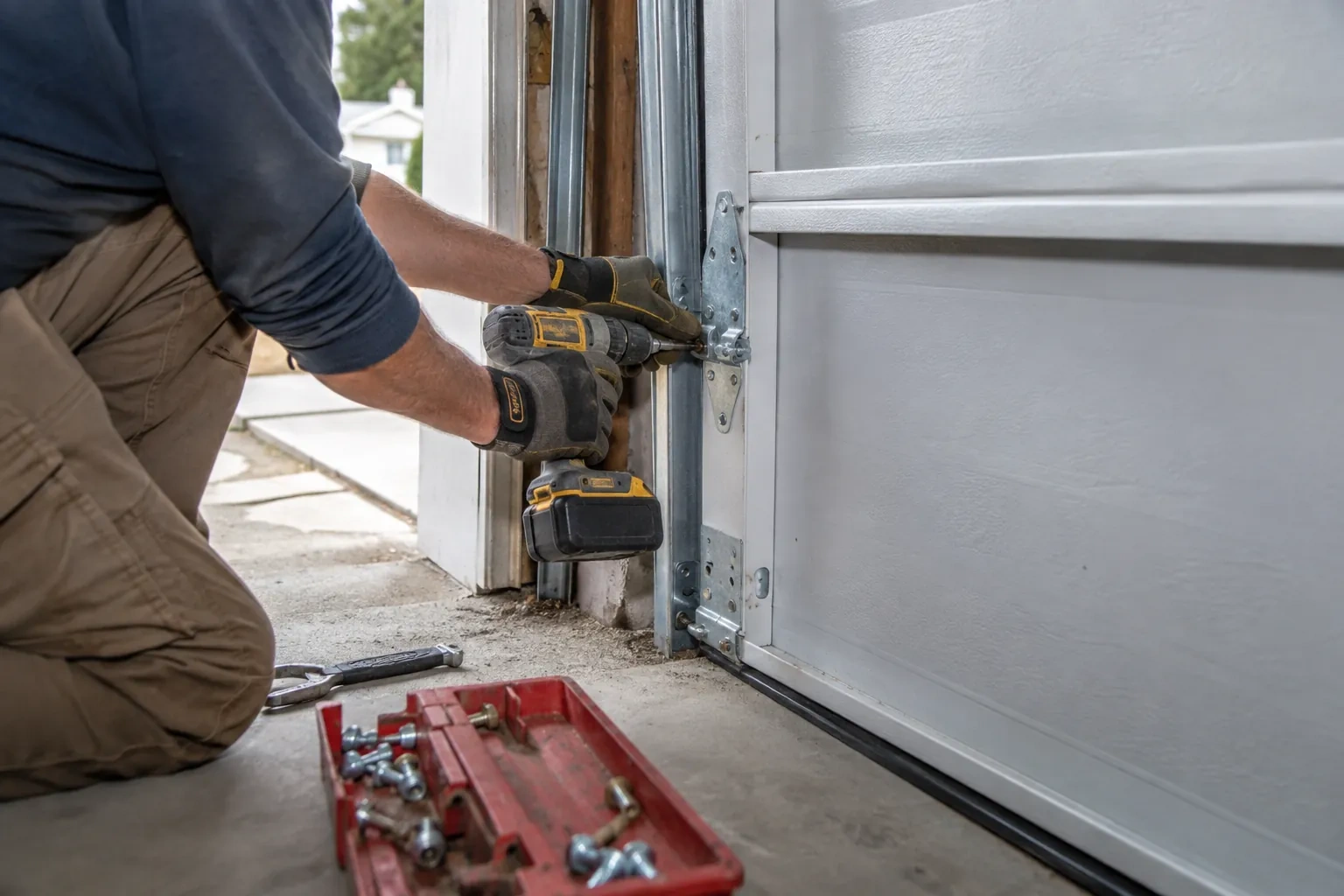
Each moving joint gets a small amount of silicone- or lithium-based lubricant: hinge pins, steel roller bearings, spring coils, the bearing plates at the torsion shaft ends, the centre bearing and the lock. The technician works the door a few centimetres by hand so the lubricant spreads into the bearings. What is not lubricated matters just as much: track surfaces are wiped clean and left dry so rollers roll rather than slide on a film that gathers grit. Nylon tires are left untreated, though an exposed nylon-roller bearing gets lubricant where its maker calls for it. The chain or belt is handled only as the opener maker directs, and excess is wiped off so it never drips onto a vehicle.
- 3
Care between visits
A tuned door stays tuned longer with a little attention from you. Every few months, put a small amount of the same silicone- or lithium-based garage door lubricant on the hinge pins and roller bearings and work the door a few times. Wipe the tracks clean and leave them dry. Keep the photo-eye lenses clear of dust and cobwebs, and keep bins and bicycles from leaning on their brackets. Rinse the door and the lower hardware after winter and treat the seals with silicone spray. Listen once a month as the door runs; a new sound is easier to address early. Anything to do with springs, cables or bottom brackets is left for the technician.
In the van
- Socket set and drivers
- Photo-eye brackets and wire
- Bottom seal (astragal)
- Hinge screws and track bolts
- Lag screws for brackets and header
What affects the quote
- 1
Upgrades you choose on the day
Quieter nylon rollers, a new bottom seal profile, a keypad or a battery backup for the opener are options some customers add while the technician is there, each priced as a separate line.
- 2
Type of opener
Chain, belt, screw and wall-mounted jackshaft openers each have their own tension checks and lubrication points, and older units take longer to set for travel and force than newer ones.
- 3
Photo-eye and wiring work
Cleaning and realigning sensors is routine. A bent bracket, a chafed wire or a sensor that has failed means a part or a rewire, which is named separately.
Same fees day, night or weekend.
Garage Door Tune-Up: questions
Which lubricant is right for a garage door?
A silicone-based or white lithium garage door lubricant, sold for the purpose. Penetrating oils and general sprays are thin, attract dust and are gone in weeks; heavy grease traps grit. For the rubber bottom seal and weatherstrip, use only a silicone spray, since petroleum products attack rubber and make it brittle. Nylon rollers with sealed bearings need no lubricant, while ones with an exposed bearing can need a touch where their own maker calls for it. A small amount on each point, worked in by moving the door, is enough.
Is a tune-up worthwhile on a door that seems to work fine?
Yes, because a garage door wears quietly. Hinge pins run dry long before they squeal, screws back out a turn at a time, springs lose tension by degrees and sensors drift. A yearly tune-up keeps the door in the condition its maker intended, catches a fraying cable or a cracked hinge while it is a small job, and confirms the safety reversal is doing its work. It is the same logic as an oil change on a car that is still running.
Why does my door struggle in cold weather?
Cold affects several things at once. Old lubricant thickens into a drag on every hinge and bearing. Steel contracts slightly, so a track that was snug becomes tight. Rubber seals stiffen and the bottom seal can freeze to the slab. The opener then reads all this extra resistance as an obstruction and stops or reverses. A fall tune-up with a low-temperature lubricant, silicone on the seals and correctly set force goes a long way toward smooth winter mornings.
Repair & Maintenance
Bigger photo, sooner job: Emergency Book soon Plan ahead
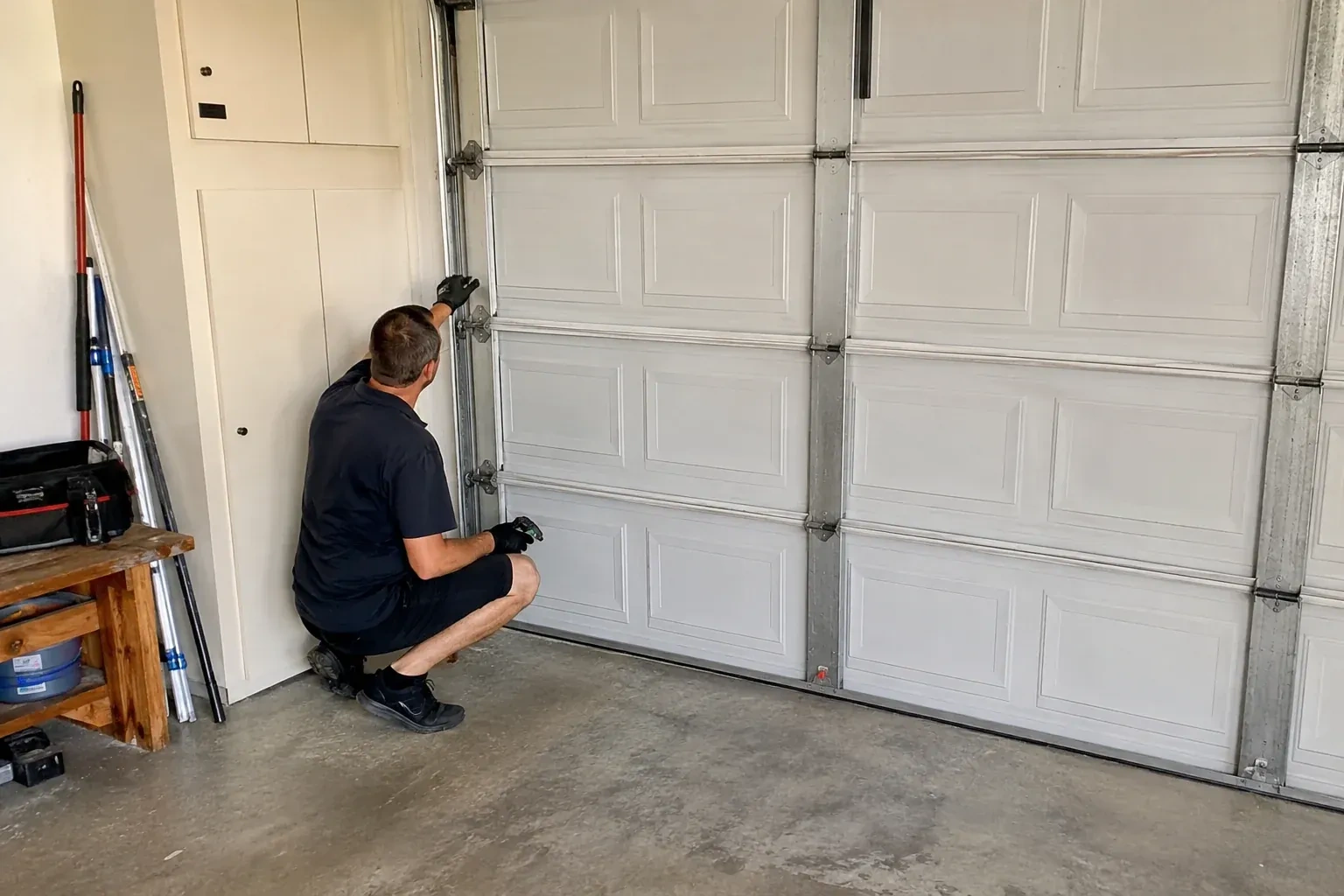 Plan aheadGarage Door Safety Inspection
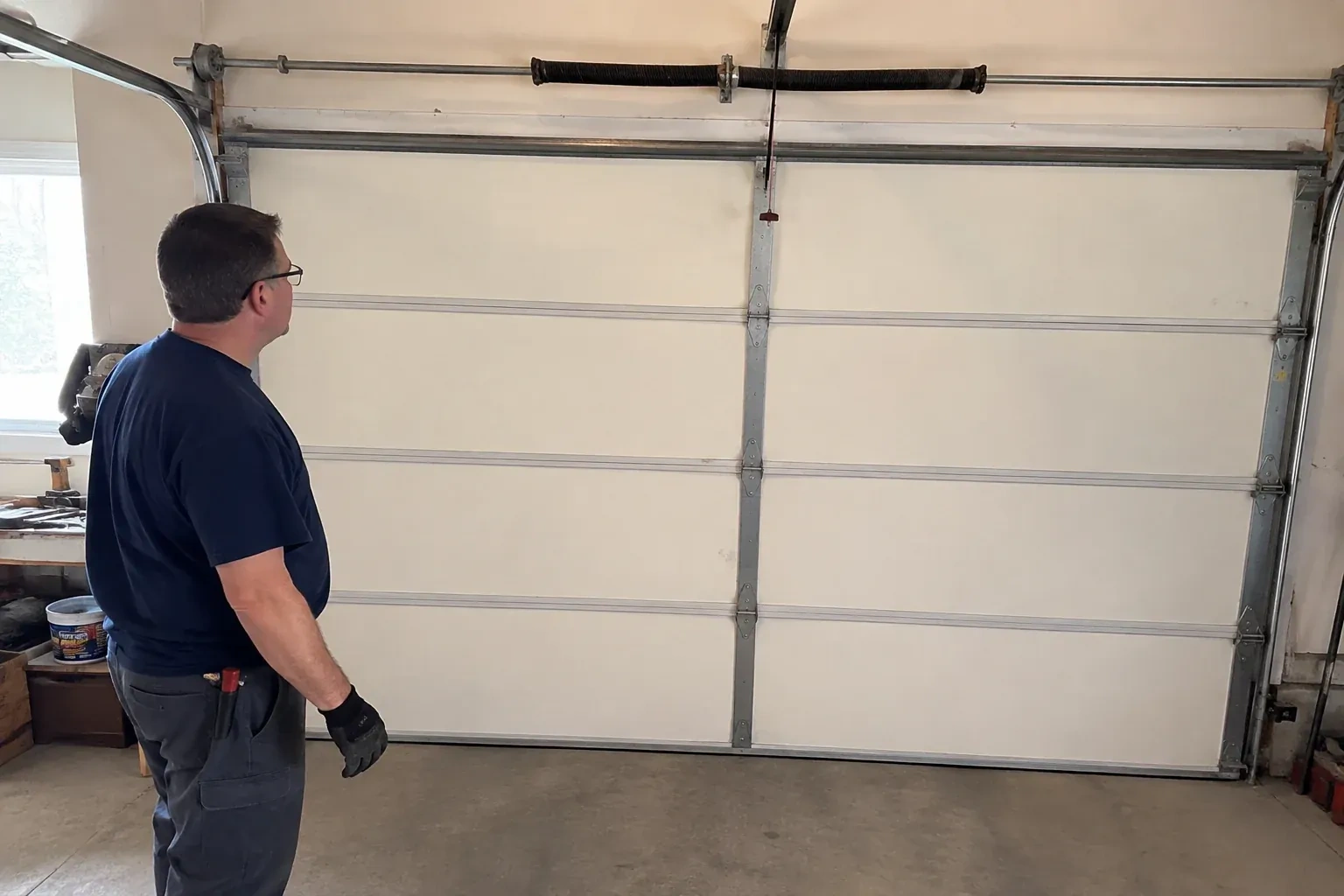 EmergencyOff-Track Garage Door ResetYou tapped the door with the bumper while backing in, barely a nudge, and now the bottom corner has swung inward.
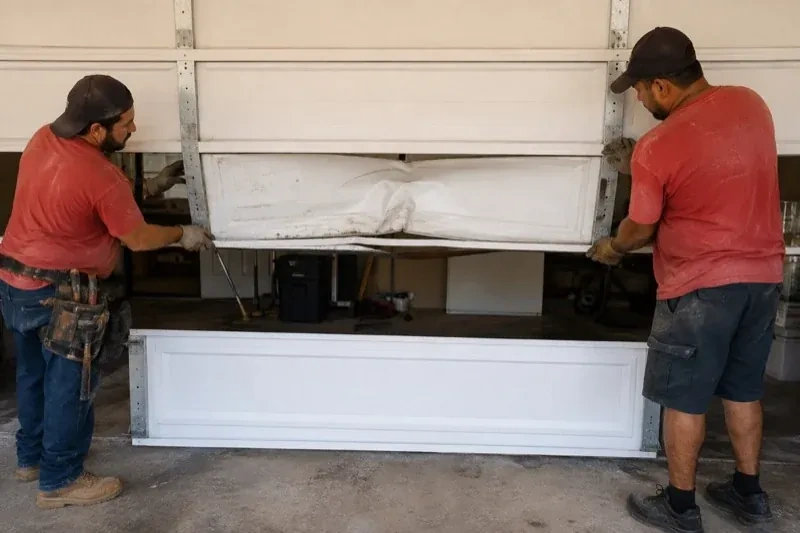 Book soonGarage Door Panel ReplacementYears of slap shots have peppered the lower two sections with dents.
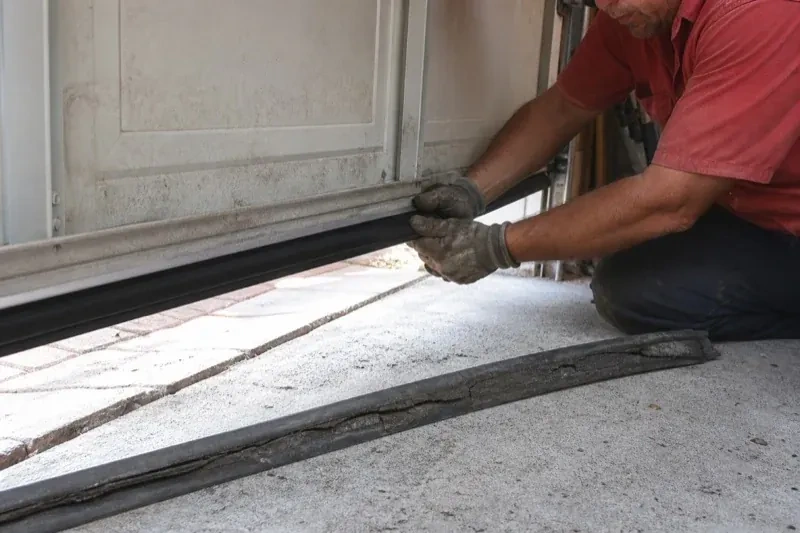 Plan aheadGarage Door Bottom Seal Replacement
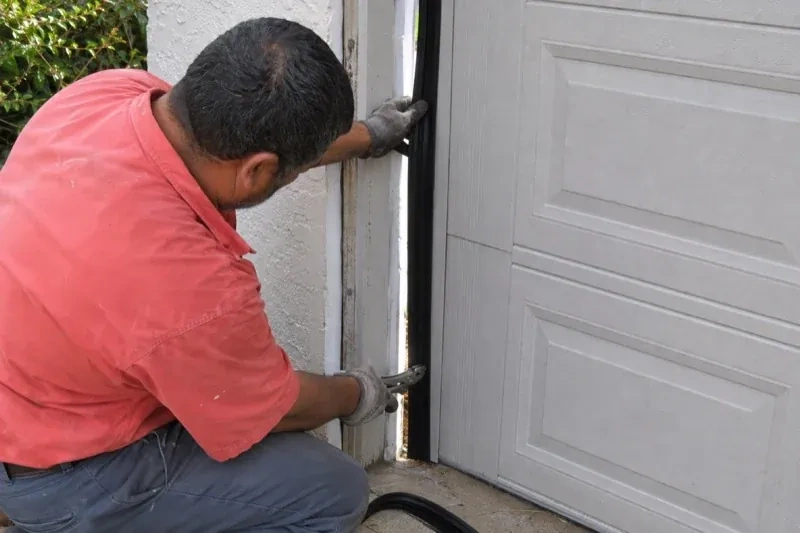 Plan aheadGarage Door Perimeter Weatherstrip
Garage Door Tune-Up near you
Toronto, Ontario
Kipling Heights information
- Town
- Kipling Heights, Toronto, Ontario
- In business
- 27 years
- Hours
- Open 24/7 · nights, weekends and holidays, same fees
- Phone
- (289) 804-6661
- Visits
- On-site assessment preferred. Request a visit or call.
What the census means at the door
58%
Older homes. About 58% of homes in Toronto were built in 1980 or earlier, according to the 2021 Census.
Original openers in older neighbourhoods often predate photo-eye sensors and rolling-code remotes. Bringing one up to date means a quieter motor, sensors that stop the door for a child or pet, and remotes that cannot be copied from the driveway, all installed in a single visit.
23%
Single-detached houses make up about 23% of homes in Toronto (2021 Census).
Condo and townhouse garages are frequently used for storage as much as parking, with the door opened many times a day, and the shared walls mean vibration travels. A well-balanced door, tight hardware and a quiet opener are the upgrades residents notice most.
Open 24/7
Request a visit
The door lands with a thud you can feel through the kitchen floor, and sometimes it bounces back up a few centimetres before settling.
Call now · open 24/7(289) 804-6661- On-site assessment preferred
- Same fees day, night or weekend
- 27 years in business